
Previous Projects
EXOTIC Exoskeleton: Pioneering Assistive Technology for Individuals with Tetraplegia
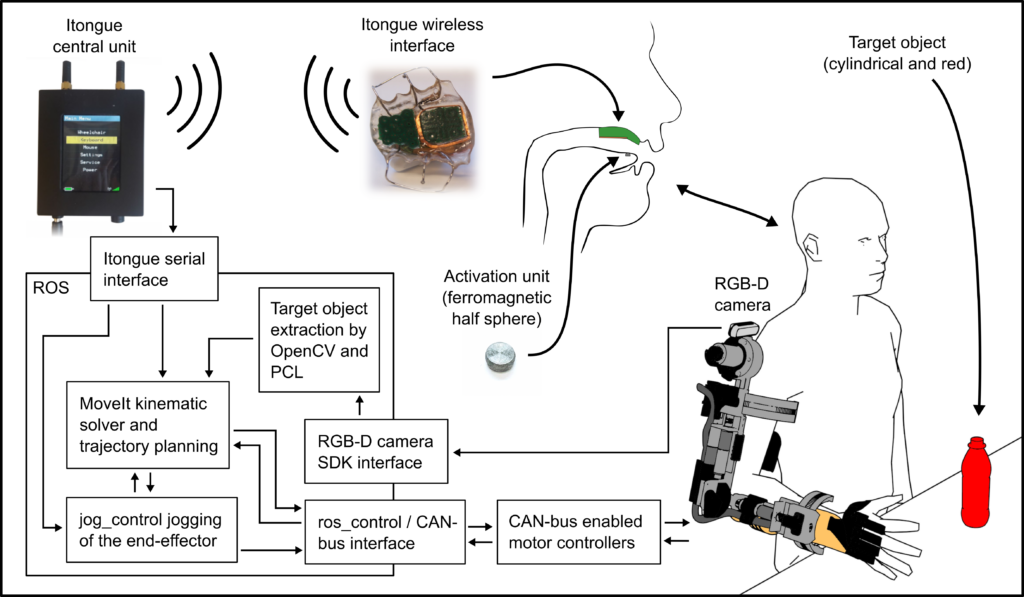
As a postdoc researcher, I was leading the development of the state-of-the-art EXOTIC exoskeleton (EXOskeleton Tongue Intelligent Control). This compact and discreet upper limb exoskeleton features 4 DoF in the arm and one for hand opening/closing, all controlled via the Itongue-interface. Tested successfully on ten individuals with tetraplegia, the exoskeleton also incorporates a computer vision system for semi-autonomous control. This project highlights my commitment to cutting-edge research and development.
Read more about the EXOTIC project here:

Augmented Reality Phantom Limb
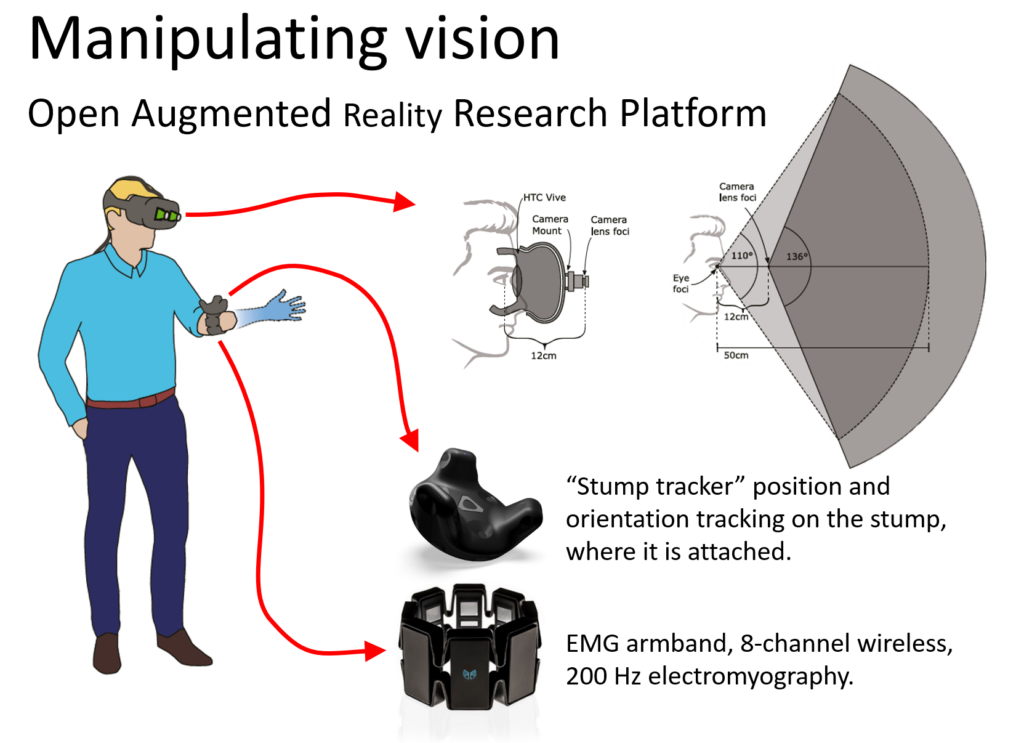
Through a series of three studies, my PhD thesis explored the impact of manipulating visual feedback on body perception and pain processing using augmented reality system. Especially, I investigated the effects of body perception on chronic pain in individuals with phantom limb pain. The results from the studies indicated a significant reduction in phantom limb pain along with potential cortical reorganization, as shown through fMRI-scans. During the studies, I built an augmented reality system (as no affordable commercial solutions were available at the time) and developed a program to simulate the ‘phantom’ in individuals with phantom limb pain. The simulated phantom was controlled through electromyographic measurements from the stump. Read more in my thesis or in an article from videnskab.dk:


OpenARRP: An Open Augmented Reality Research Platform
AR and VR systems have been increasingly adopted for research in neuroscience and perception, as they allow for the manipulation of the visual sense. During my PhD, I needed a system, that could provide a convincing augmented reality experiences. Since there were no such systems available at the time, I created my own. This post outlines the creation of the AR platform I created for use in research, which was cheap, had known specifications and could be assembled with information from an open source repository. The platform was focused on, but not limited to, eye-hand coordination.
Read more about the OpenARRP project in my PhD-thesis: